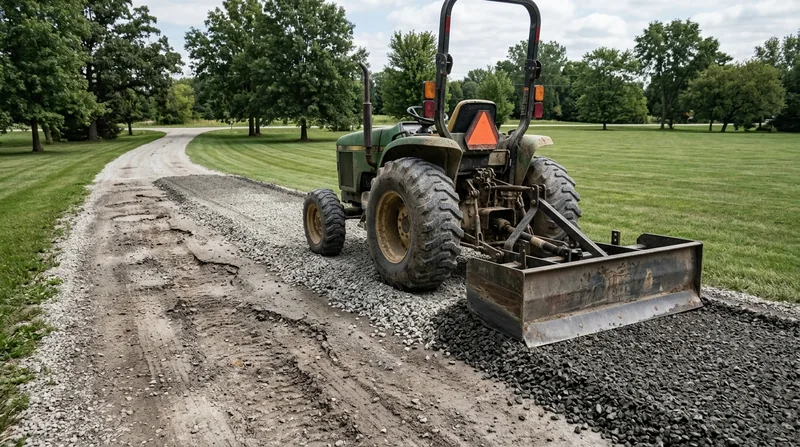




Chicago's exurban landscape is laced with gravel lanes and rural driveways that connect acreage to county roads across heavy glacial clay that holds water and washes out with every spring thaw. Gravel driveway installation and grading in Chicago and the surrounding collar counties is not cosmetic work, it is foundation work. A properly built gravel drive sits on a compacted stone base, crowned to shed water, and maintained with regular regrading to hold its shape through forty freeze-thaw cycles a winter. When you grade correctly the first time, you build the platform for every future paving job, and you solve the washout and pothole problems that plague ungraded lanes for years. We install new gravel drives in proper lifts of crushed stone over fabric, and we regrade lanes that have settled or washed out, crowning them to direct water away from the drive and into the shoulders where it belongs.
Why Gravel Driveway Installation and Grading Matters in Chicago's Exurban Corridors
The collar counties from Homer Glen to Barrington are built on long private roads and gravel lanes that were never designed to handle concentrated water flow. Spring melt and heavy rain carve ruts and washouts into unmaintained gravel, and freeze-thaw heave opens potholes that strand vehicles and damage suspensions. Proper grading and compacted stone base solve these problems before they start, and a well-graded drive is the foundation that makes future asphalt or millings work hold. We grade for crown, slope, and drainage so water moves off the surface instead of pooling and weakening the base.
- We install gravel drives in compacted lifts with stone fabric underneath to separate the base from the subgrade clay.
- We crown the drive to pitch water toward the shoulders and prevent standing water that causes washout and base failure.
- We regrade existing lanes that have settled, rutted, or developed low spots that pond water in spring.
- We build the base platform that makes overlay or paving work hold longer and perform better when you upgrade later.
- We proof-roll and compact each lift to specification so the drive does not settle under vehicle weight in the first season.
A graded and crowned gravel drive sheds water instead of holding it, which stops the freeze-thaw damage that destroys ungraded lanes every winter in Chicago.
Key info: Illinois law requires that any excavation for grading, fill, or base prep include a utility locate through Illinois 811 before work begins. We call it in on every job. Confirm with your village whether a driveway or access permit is required before we start, as rules vary from Naperville to Joliet to Elgin.
For more on how grading works as part of a larger paving strategy, see our page on asphalt driveway paving and installation.
How We Install and Grade Gravel Driveways in Chicago
Every gravel drive we build starts with a site visit to measure the drive, assess drainage, and understand how water moves across and away from the property. We establish grades, identify low spots, and specify the stone type and tonnage needed to build a proper base in compacted lifts. We then excavate, place fabric, and compact crushed stone in layers, crowning the surface so water runs off instead of pooling. The entire process takes two to three days for a typical residential drive, depending on length, width, and the amount of regrading needed.
- We measure the drive, establish drainage slope and crown, and calculate tonnage of crushed stone required for proper compaction.
- We excavate and remove failed or rutted surface material, then lay stone fabric to separate subgrade clay from the new base.
- We place and compact the first lift of 3/4-inch crushed stone, then add a second lift of smaller stone or millings for a stable surface.
- We crown the finished surface with a two to four percent slope away from structures so water sheds toward the shoulders.
- We proof-roll the compacted base with a heavy vehicle to verify it holds weight without settling or rutting.
A properly crowned and compacted gravel drive holds its shape through the Chicago winter and requires only seasonal regrading to maintain its profile.
Example: A 200-foot rural lane in Barrington with heavy clay subgrade and spring washout received 120 tons of compacted crushed stone in two lifts, crowned to shed water into the roadside swale. The drive now requires only light regrading every other season instead of annual base repair. Every estimate we write specifies compacted thickness and tonnage so you know exactly what you are getting.
When you are ready to move from gravel to asphalt, the graded base we build becomes the foundation for asphalt resurfacing or overlay work, which holds much longer on a properly prepared subgrade.
Gravel Driveway Installation and Grading Methods
| Approach | Description | Best for |
|---|---|---|
| New gravel drive installation | Excavate subgrade, lay stone fabric, install compacted crushed stone base in two lifts, crown for drainage, proof-roll to specification. | New construction or complete replacement of failed gravel lanes on acreage or rural roads. |
| Regrading and crowning | Scarify existing surface, recompact and reshape to proper crown, add stone as needed to restore height and slope. | Existing gravel drives that have settled, rutted, or lost crown and are washing out in spring thaw. |
| Pothole and washout filling | Fill washouts and potholes with compacted stone, restore crown and drainage, blend with existing surface. | Seasonal damage to gravel lanes, spring ruts, and localized base failure that does not require full regrading. |
| Base preparation for future paving | Grade and compact stone base to specification for asphalt or recycled millings overlay, establish proper slope and crown. | Gravel lanes planned for future asphalt paving, where base quality directly affects paving longevity and performance. |
| Recycled asphalt or millings surface | Install compacted stone base, then top with recycled asphalt millings or crushed asphalt for a more durable wearing surface than virgin stone. | Budget-conscious gravel drive upgrade that offers better durability and compaction than crushed stone alone. |
Gravel Driveway Installation and Grading Cost in Chicago: What to Expect
Gravel driveway installation and grading costs in Chicago and the surrounding counties depend on drive length, width, the depth of excavation required, and the tonnage of compacted stone. A typical residential gravel drive of 150 to 200 feet with proper base preparation and crown starts at around $950 to $1,500, but larger lanes, deeper excavation, or extensive regrading of washed-out surfaces can run higher. Every estimate we write specifies the compacted thickness, tonnage, and slope so you understand exactly what the cost covers and why.
Factors that move the price up include:
- Drive length and width, as longer and wider lanes require more stone and compaction labor.
- Depth of excavation and subgrade removal needed if the existing base has failed or the clay is saturated.
- Tonnage of crushed stone required, which depends on base depth and compaction specification.
- Regrading or crowning work on existing lanes that have settled or lost drainage slope.
- Access and site conditions, including tight turns, trees, or structures that limit equipment movement.
We recommend getting two or three estimates from local contractors before deciding, so you can compare tonnage, compaction depth, and the specific materials each crew proposes. A cheap estimate that skips proper compaction will washout in the first spring, so the lowest price is not always the best value. See our full pricing overview for more detail on gravel and base preparation costs across different job sizes.
Gravel Driveway Installation and Grading Near Me: What Chicago Homeowners Should Know When Hiring
Hiring the right contractor for gravel driveway installation and grading means verifying that the crew is local, fully insured, and willing to put their specifications in writing. Ask any contractor for proof of insurance and check whether your village or township requires a driveway permit or access permit before work begins, as rules vary from Cicero to Schaumburg to Elgin. If your property is part of an HOA, confirm that gravel or a gravel-to-asphalt plan is allowed under the architectural guidelines before you commit. Request at least two estimates and compare the tonnage, compaction depth, and crown slope each one specifies, not just the price.
- Confirm that any contractor you hire is fully insured and can provide a current certificate of insurance before work starts.
- Ask for a written estimate that includes drive dimensions, stone type, compacted thickness in inches, and total tonnage.
- Check with your local village or city building department to confirm whether a driveway permit or culvert permit is required.
- Verify HOA architectural standards if your property is in a master-planned community, as some restrict gravel or require specific materials.
- Get references from the contractor and ask about prior gravel or base preparation work in your area.
- Confirm that the contractor will call Illinois 811 for a utility locate before any excavation begins, as required by state law.
A local contractor with Chicago plates and a verifiable address is your best protection against transient paving crews that disappear after the job fails. Call us at (312) 878-9687 for a free estimate and a written specification sheet that shows exactly what you are getting.
Gravel Driveway Installation & Grading in Chicago: Pricing Guide
| Service | Price | Details |
|---|---|---|
| Gravel drive installation, 150-200 feet | Starting at $950 | Includes excavation, stone fabric, two lifts of compacted crushed stone, crown and drainage, proof-roll to specification |
| Regrading and crowning existing gravel lane | Starting at $650 | Scarify, recompact, reshape crown, add stone as needed to restore slope and prevent washout in spring |
| Pothole and washout repair on gravel drive | Starting at $400 | Fill localized failures, restore crown and drainage, blend with existing surface without full regrading |
| Base preparation for future asphalt paving | Starting at $1,200 | Grade and compact stone base to specification, establish proper slope and crown for overlay or paving work |
| Larger lanes, extensive regrading, or complex site conditions | On estimate | Acreage, multiple ruts, deep excavation, or tight access requires site visit to measure and calculate tonnage |
| Free estimate and written specification | No charge | Response within 24 hours at (312) 878-9687, includes drive dimensions, tonnage, thickness, and crown slope |
Indicative pricing, the exact cost depends on square footage, finish, and site access. Free personalized estimate within 24h at (312) 878-9687.


