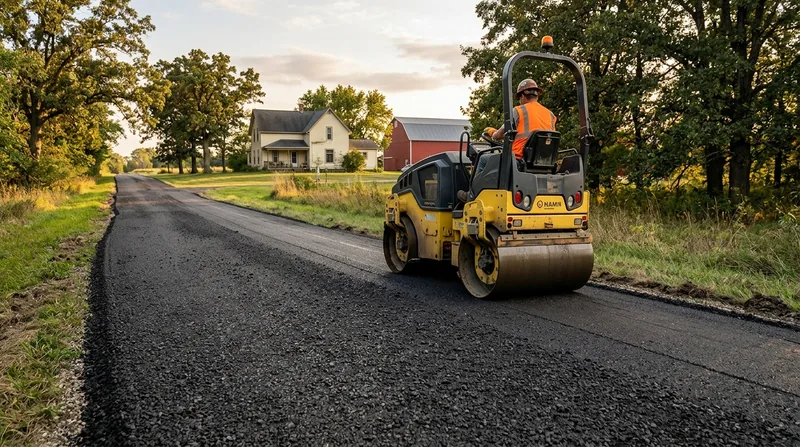




Recycled asphalt and millings driveways in Chicago offer a practical, budget-conscious surface for long farm lanes, private roads, and parking pads across the collar counties and exurban stretches where hot mix asphalt runs $4 to $6 per square foot. Compacted millings bind tighter every summer, shed water when graded properly, and cost roughly half what new asphalt does, making them the smart choice for rural properties, HOA common areas, and owners willing to trade some maintenance for real savings. Chicago's heavy glacial clay holds water and amplifies freeze-thaw damage, so proper grading and drainage matter as much as material choice. We grade, spread, and roll millings to slope away from structures, tell you plainly where hot mix is worth the difference, and help you understand when millings make sense and when they don't. This page covers what recycled asphalt millings are, how we install them, what they cost, and how to choose the right surface for your property.
Why Recycled Asphalt Millings Matter in Chicago's Exurban and Rural Landscape
Greater Chicago's outer ring and collar counties hold thousands of long gravel lanes, private roads, and rural properties where hot mix asphalt is overkill and gravel alone washes away every spring. Recycled asphalt millings solve that problem by binding tighter than gravel, lasting longer than crushed stone, and costing a fraction of new hot mix. The material is reclaimed from old pavements and milling operations, compacted and spread to create a surface that hardens and binds with each summer heat cycle. In areas like Homer Glen, Barrington, and the Kendall and McHenry exurbs, millings driveways serve ranch properties, hobby farms, and acreage where the choice between gravel and paving is stark.
- Recycled millings cost roughly 40 to 50 percent less than new hot mix asphalt and eliminate the gravel maintenance cycle.
- The material binds progressively tighter over two to three summers as heat and traffic compact it, improving drainage and ride quality.
- Proper grading and crown are critical in Chicago's clay soil, which holds water and accelerates base failure if drainage fails.
- Millings work best for low-speed, lower-traffic surfaces like private roads, farm lanes, and parking pads rather than high-volume residential driveways.
- We grade the subgrade, spread millings to the correct compacted thickness, and roll to specifications that shed water away from structures and utilities.
Recycled asphalt millings are not a permanent surface like hot mix, but they are far more durable than gravel and cost-effective for rural and low-traffic applications across the Greater Chicago region.
Key info: Chicago's Department of Transportation and suburban building departments do not typically regulate millings driveways on private property the way they do curb cuts and apron extensions. However, stormwater rules, impervious-surface limits, and utility locates (required by Illinois 811 law) still apply. Check with your village or city before work begins, and always request a free utility locate before grading or excavation.
For more information on how recycled materials compare to new asphalt, see our guide to asphalt driveway paving and installation in Chicago.
How We Install Recycled Asphalt Millings Driveways: Step-by-Step Process
Installing a millings driveway correctly means grading the subgrade to shed water, spreading material to the right compacted depth, and rolling it firm enough to bind but loose enough to allow compaction over the next few summers. We start with a site inspection to understand drainage, soil condition, and existing utilities, then plan the crown and cross-slope that will move water away from your home and structures. Chicago's heavy clay means we pay special attention to base preparation and ensure the finished surface slopes at least 2 to 3 percent away from the property.
- We locate all utilities using Illinois 811 before any grading or excavation work begins.
- We grade and shape the subgrade to create proper crown and cross-slope for drainage away from structures.
- We spread recycled asphalt millings to the specified compacted thickness, typically 2 to 3 inches for driveways and up to 4 inches for heavy-use parking pads.
- We proof-roll and compact the material with a vibratory roller to bind the millings and create a stable, level surface.
- We provide written specifications on compacted thickness, tonnage, and slope so you know exactly what was installed.
A typical residential millings driveway in Naperville or Schaumburg takes one to two days, depending on length and site conditions. We give you a written estimate with compacted thickness and tonnage specs on every job, so you know what you're paying for and what to expect.
Local example: A 200-foot private road in Homer Glen with poor drainage and soft clay soil required 3-inch compacted millings, two passes with a vibratory roller, and careful grading to slope away from the tree line. The cost was roughly half what new asphalt would have been, and the material will bind tighter each summer. The owner maintains the surface by raking high spots back into low areas every spring and adding a light top-off of millings every three to four years.
For comparison, see how gravel driveway installation and grading differs from millings, and when each makes sense.
Methods and Materials: Millings, Hot Mix, and Alternatives
| Approach | Description | Best for |
|---|---|---|
| Recycled Asphalt Millings | Reclaimed asphalt from milling operations and old pavements, spread and compacted to 2 to 4 inches. Binds progressively over two to three summers. | Private roads, farm lanes, low-traffic parking pads, rural properties where cost is a priority and some maintenance is acceptable. |
| Hot Mix Asphalt (New) | Virgin asphalt concrete installed at 2 to 3 inches over a prepared base. Cures in 24 to 48 hours and provides a smooth, long-lasting surface. | Residential driveways, high-traffic areas, parking lots, and properties where durability and low maintenance are required. |
| Gravel (Crushed Stone) | Loose crushed limestone or granite, graded and crowned for drainage. Requires regular raking and periodic top-off. | Temporary surfaces, very low-traffic lanes, aesthetic rural properties where the natural look is preferred. |
| Tar and Chip | Liquid asphalt binder applied to stone chips, creating a rustic, semi-bound surface. Lasts 5 to 10 years with maintenance. | Rural driveways, historic properties, and owners seeking a middle ground between gravel and paving. |
Recycled Asphalt and Millings Driveways Cost in Chicago: What to Expect
Recycled asphalt millings driveways in Chicago typically start at $3 per square foot for material and installation, making them roughly 40 to 50 percent cheaper than new hot mix asphalt. A 500-square-foot private driveway might run $1,500 to $2,000 installed, while a long farm lane or rural parking pad can cost $2,500 to $5,000 depending on length, grading difficulty, and site access. The final cost depends on soil condition, drainage challenges, existing grade, and whether we need to remove old material or improve the base.
Chicago's heavy glacial clay and high water table mean that poor drainage is the biggest cost driver. If the subgrade is soft or poorly drained, we must grade more aggressively and may recommend thicker millings or a gravel base layer underneath, which increases cost. Conversely, a well-drained site with stable clay or sand may require less preparation and fall toward the lower end of the range. We always provide a written estimate with compacted thickness and tonnage so you know exactly what you are paying for, and we recommend getting two or three estimates from local contractors to understand the range and compare approaches.
For detailed pricing on other asphalt services, see our full pricing overview. For a free estimate on your specific property, call (312) 878-9687 or request an estimate online.
Recycled Asphalt and Millings Driveways Near Me: What to Look for When Hiring a Contractor
Choosing the right contractor for a millings driveway is as important as choosing the right material. You want someone who understands Chicago's soil and drainage challenges, provides a written estimate with thickness and tonnage specs, and is willing to explain why they recommend millings or suggest hot mix instead. The biggest red flag in paving is the unsolicited door-to-door pitch offering leftover asphalt at a discount. Honest contractors respond to calls and estimates, provide references, and stand behind their work with a workmanship warranty.
- Ask any contractor for proof of insurance coverage and request a certificate of insurance before work begins.
- Request written estimates that specify compacted thickness, tonnage, and slope so you can compare apples to apples across contractors.
- Check references from recent jobs in your area, particularly properties with similar soil and drainage challenges.
- Verify that the contractor will call for a free utility locate through Illinois 811 before any grading or excavation.
- Ask about the contractor's workmanship warranty and what is covered if the surface fails prematurely due to installation error.
- Be skeptical of prices that seem too good to be true or contractors who pressure you for a large cash deposit before work begins.
We are fully insured and have been in business since 2011. We welcome your questions about material choice, drainage, and cost, and we are happy to explain why we recommend millings for your property or suggest an alternative if it makes more sense. Call (312) 878-9687 or contact us for a free estimate.
Recycled Asphalt & Millings Driveways in Chicago: Pricing Guide
| Service | Price | Details |
|---|---|---|
| Recycled Asphalt Millings Driveway | Starting at $3/sq ft | Material and installation with proper grading and compaction; cost varies by site drainage and clay condition |
| Private Road or Farm Lane (Millings) | Starting at $2,500 to $5,000 | Longer surfaces benefit from economies of scale; final cost depends on length, terrain, and base preparation |
| Base Preparation or Grading (Heavy Clay) | On estimate | Chicago's glacial clay often requires additional grading or base layer; site inspection determines scope and cost |
| Comparison: New Hot Mix Asphalt | Starting at $4 to $6/sq ft | More durable and low-maintenance than millings but costs 40 to 50 percent more; recommended for high-traffic driveways |
| Free Estimate | No charge | Written estimate with thickness and tonnage specs; response within 24 hours at (312) 878-9687 |
Indicative pricing, the exact cost depends on square footage, finish, and site access. Free personalized estimate within 24h at (312) 878-9687.


