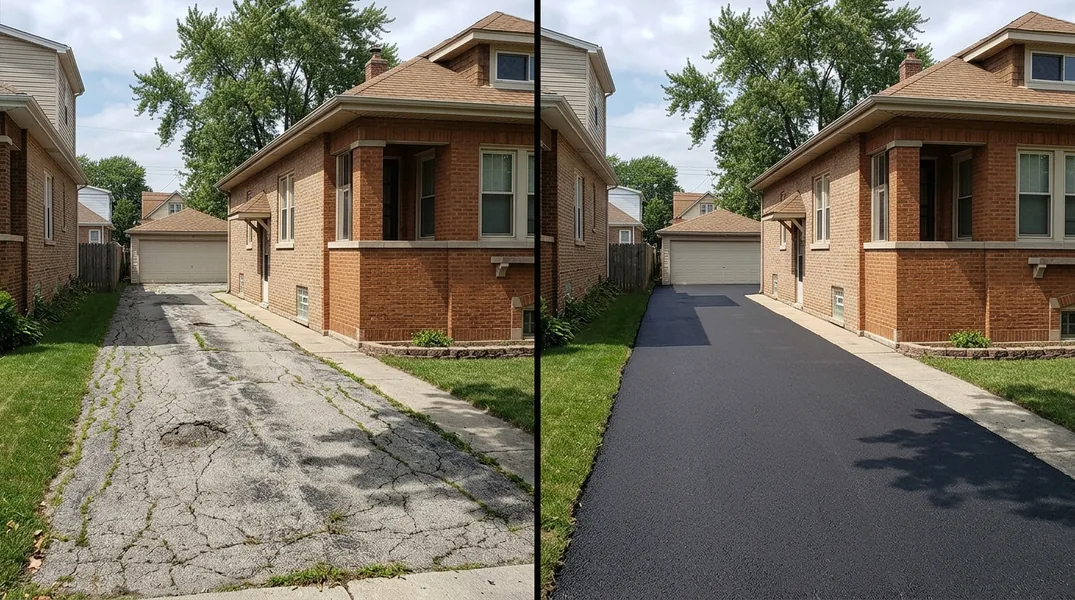
Asphalt vs Concrete Driveway: The Chicago Winter Challenge
When you're a homeowner in Chicago, choosing between an asphalt and concrete driveway isn't just about aesthetics or upfront cost. It's about survival. Our winters are brutal, with freeze-thaw cycles that can crack, heave, and destroy a poorly chosen surface in just a few seasons. Understanding how each material performs under these conditions is essential before you invest thousands of dollars in a new driveway.
Both asphalt and concrete have loyal advocates, but they respond very differently to the extreme temperature swings and road salt that define a Chicago winter. The material you choose will determine how often you'll need repairs, how long your investment will last, and ultimately how much you'll spend maintaining it over the years. This guide breaks down the real-world performance of each option so you can make an informed decision.
How Concrete Performs in Chicago's Freeze-Thaw Cycles
Concrete is a rigid, durable material that many homeowners initially prefer because it lasts longer and requires less frequent maintenance than asphalt. However, concrete has a critical weakness in climates like Chicago: it's extremely vulnerable to freeze-thaw damage. When water penetrates the surface and freezes, it expands with tremendous force. This expansion causes the concrete to crack, spall (chip away), and eventually break apart into large pieces.
The problem gets worse over time. Once cracks form, more water enters, and the cycle accelerates. Road salt, which is essential for winter safety but highly corrosive, also damages concrete by attacking the reinforcing steel beneath the surface and causing internal deterioration. Many Chicago homeowners discover that their concrete driveway, which seemed like a permanent solution, begins showing significant damage within five to seven years of harsh winters. Repairs become increasingly expensive, and eventually, full replacement becomes necessary.
Why Asphalt and Blacktop Driveways Excel in Chicago Winters
Asphalt and blacktop (the terms are interchangeable) handle Chicago winters far more gracefully than concrete. The key difference is flexibility. Unlike rigid concrete, asphalt is a semi-flexible material that can expand and contract with temperature changes without cracking. When water freezes beneath an asphalt surface, the material moves slightly rather than breaking, which dramatically reduces the risk of catastrophic damage.
Additionally, asphalt's dark color absorbs heat from the sun, which helps melt snow and ice more quickly than light-colored concrete. This natural advantage means less ice buildup and fewer slip hazards on your driveway during winter mornings. The material also sheds water more effectively because of its slightly textured surface, reducing the amount of moisture that can penetrate and cause freeze-thaw problems. For homeowners considering Asphalt Driveway Paving & Installation in Chicago, this performance advantage is often the deciding factor.
Asphalt Driveway Lifespan: What to Expect in Chicago
A well-installed asphalt driveway in Chicago typically lasts 15 to 20 years with proper maintenance. This might sound shorter than concrete's theoretical 30-year lifespan, but the reality is more nuanced. A concrete driveway in Chicago often fails structurally long before reaching 30 years due to freeze-thaw damage, while a properly maintained asphalt driveway often lasts closer to its full expected life. The key is regular maintenance, which is far simpler and less expensive for asphalt than the repairs required by damaged concrete.
The asphalt driveway lifespan depends heavily on how you care for it. Seal coating every two to three years protects the surface from oxidation, water damage, and UV rays, extending the life significantly. Small cracks should be filled promptly to prevent them from spreading. With these preventive measures, many Chicago homeowners get 20+ years from their asphalt driveways, and some report excellent performance well beyond that. Compare this to concrete, where repair options are limited once serious cracking begins, and the economics strongly favor asphalt for Chicago's climate.
Can You Pave Asphalt Over Concrete? A Practical Solution
If you already have a concrete driveway that's showing age but isn't completely destroyed, you might be wondering if you can simply pave over it with asphalt. The answer is yes, and it's often a smart, cost-effective solution. Asphalt Resurfacing & Overlay allows you to place a fresh asphalt layer directly over an existing concrete surface, giving you the benefits of asphalt without the expense of removing and replacing the concrete underneath.
However, there are conditions. The concrete must be structurally sound enough to support the new asphalt layer. If the concrete is severely cracked, heaving, or spalling, those problems will eventually telegraph through to the new asphalt surface. A professional inspection is essential before proceeding. When done correctly on suitable concrete, an asphalt overlay can extend your driveway's life by 15 years or more and provide superior winter performance compared to the original concrete. This approach is particularly popular in Chicago for homeowners looking to upgrade aging driveways without the disruption and cost of complete removal.
Maintenance, Cost, and Long-Term Value in Chicago
The maintenance requirements for asphalt and concrete differ significantly, and this directly impacts your long-term costs. Asphalt requires regular seal coating, crack filling, and occasional Pothole Repair & Asphalt Patching to stay in good condition. These are relatively inexpensive, routine tasks that most homeowners can budget for easily. Concrete, by contrast, requires minimal maintenance until problems develop, but then repairs become expensive and often unsightly. Patching concrete typically leaves visible marks, and large cracks or spalling often require professional intervention.
When you factor in the true cost of ownership over 20 years, asphalt usually wins in Chicago. The initial pricing for asphalt is typically lower than concrete, and routine maintenance is affordable. Concrete may seem cheaper initially, but freeze-thaw damage repairs, replacement sections, and eventual full replacement often exceed the total cost of maintaining an asphalt driveway. If you're ready to explore your options and understand the real costs for your specific situation, contact Chicago Asphalt Paving at (312) 878-9687 for a free estimate. Our team can assess your current driveway and provide honest guidance on the best solution for your home and budget.
Looking for a professional asphalt paving contractor in Chicago? Chicago Asphalt Paving responds fast for all your asphalt paving needs.
Get a Free Quote