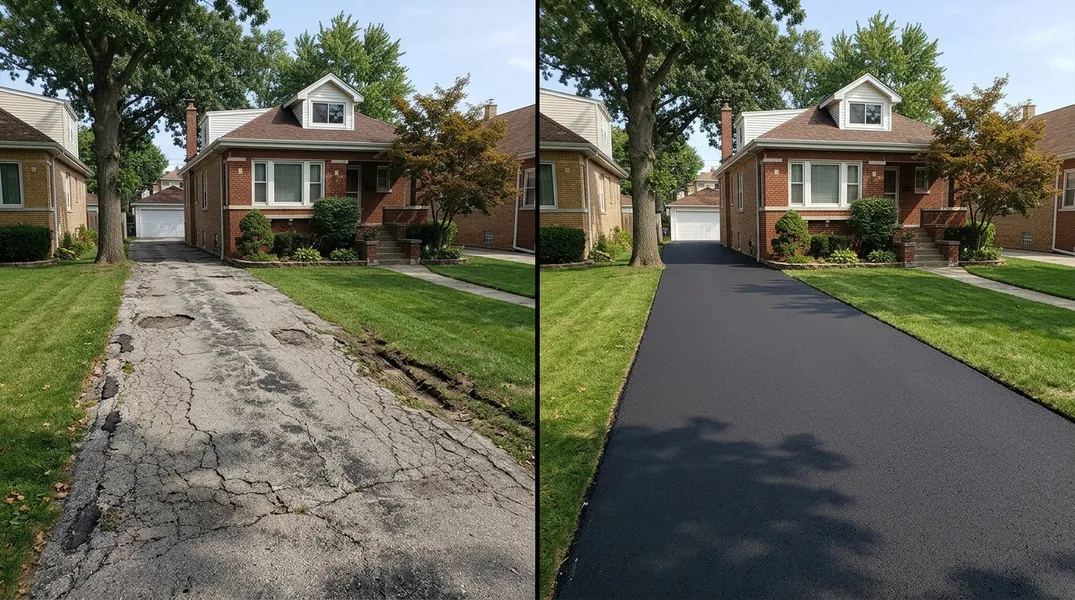
Understanding Asphalt Driveway Lifespan in Chicago's Climate
If you own a home in Chicago, you know that winter is relentless. The freeze-thaw cycle that defines our cold months is one of the harshest conditions any asphalt driveway will face. Understanding how long an asphalt driveway lasts in our region requires acknowledging that Chicago's climate is uniquely challenging compared to warmer parts of the country.
On average, a well-maintained asphalt driveway lasts between 15 to 20 years in ideal conditions. However, in Chicago, where temperatures swing dramatically from below freezing to above, that timeline can compress significantly. The constant expansion and contraction of asphalt caused by temperature fluctuations creates stress on the material, leading to cracks, potholes, and accelerated deterioration. Homeowners in our area often find their driveways showing serious signs of wear by year 10 to 15, rather than the longer timelines you might read about in general guides.
The Freeze-Thaw Effect: Why Chicago Winters Are Tough on Asphalt
The freeze-thaw cycle is the primary enemy of asphalt durability in northern climates. Here's how it works: when water seeps into small cracks in your asphalt and then freezes, it expands. This expansion pushes the asphalt apart, making cracks wider and deeper. When the ice melts, those cracks remain, and water continues to penetrate further into the base layers of your driveway. Over dozens of freeze-thaw cycles each winter, this process accelerates dramatically, turning minor surface cracks into major structural problems.
Chicago experiences an average of 40 to 50 freeze-thaw cycles per winter season, depending on the year. This aggressive cycling is much more damaging than simply living in a cold climate where temperatures stay consistently below freezing. The constant movement and stress on the asphalt material weakens its structural integrity far faster than time alone would suggest. Additionally, road salt and de-icing chemicals used throughout Chicago can further deteriorate asphalt by breaking down the binder that holds the material together. If you haven't already invested in preventive maintenance, your driveway is likely aging faster than you realize.
Signs Your Driveway Needs Attention Before Total Replacement
Not every damaged driveway needs to be completely replaced. Learning to recognize early warning signs can help you extend your driveway's life and save money through targeted repairs. The first signs of trouble typically appear as hairline cracks or small spider web patterns on the surface. These cracks might seem minor, but they're invitations for water to penetrate deeper. If you notice these early, Driveway Repair can often seal these cracks before they become serious problems.
As damage progresses, you'll see alligator cracking (a pattern that resembles alligator skin), potholes, or soft spots where the asphalt feels spongy underfoot. At this stage, Pothole Repair & Asphalt Patching may still be effective, though larger sections of damage might benefit from Asphalt Resurfacing & Overlay instead of a full replacement. Resurfacing can add 8 to 10 additional years to a driveway's life if the underlying base is still sound. The key is catching these issues before they spread across your entire driveway, which is why regular inspections, especially in spring after Chicago's harsh winters, are essential.
When to Replace Your Asphalt Driveway: The Replacement Timeline
There comes a point when repair and resurfacing are no longer cost-effective, and complete replacement becomes the best option. If your driveway shows widespread cracking, multiple large potholes, significant surface deterioration, or if repairs are needed every year or two, it's time to consider replacement. Most homeowners find that once a driveway reaches 15 to 18 years old in Chicago, the cost of ongoing repairs exceeds the cost of starting fresh with Asphalt Driveway Paving & Installation.
The good news is that a newly installed asphalt driveway can serve you reliably for another 15 to 20 years if you commit to proper maintenance. This includes seal coating every 2 to 3 years, addressing cracks promptly, and keeping your driveway clean and well-drained. Proper drainage is particularly important in Chicago, where spring snowmelt and heavy rains can cause water to pool on or beneath your driveway, accelerating deterioration. If you're unsure whether your driveway is at the end of its life, Chicago Asphalt Paving offers a free estimate to assess your driveway's condition and recommend the best course of action.
Maintenance Tips to Extend Your Driveway's Life Through Chicago Winters
The difference between a driveway that lasts 10 years and one that lasts 20 years often comes down to maintenance. Seal coating is the single most important preventive measure. This protective layer shields the asphalt from water penetration, UV damage, and chemical exposure. In Chicago's climate, applying a seal coat every 2 to 3 years is recommended. Many homeowners neglect this step, thinking it's unnecessary, but it's actually one of the most cost-effective investments you can make in your driveway's longevity.
Beyond seal coating, keep your driveway clear of debris and standing water. After heavy rains or snowmelt, ensure water drains away from your driveway rather than pooling on the surface. Fill small cracks as soon as you notice them, before they have a chance to expand during the next freeze-thaw cycle. Avoid using rock salt for de-icing if possible; instead, use sand or calcium chloride products that are less harsh on asphalt. Finally, minimize heavy vehicle traffic when your driveway is very cold, as asphalt becomes more brittle in extreme cold and is more susceptible to cracking under stress. These simple steps, practiced consistently, can add years to your driveway's life and reduce the frequency and cost of repairs.
Asphalt Driveway Paving & Installation Cost in Chicago: What to Budget
When it's time for a new driveway, understanding the investment required helps you plan accordingly. The cost of Asphalt Driveway Paving & Installation varies based on factors including the size of your driveway, the condition of the underlying base, site accessibility, and current material costs. In Chicago, you can expect to pay between $3 to $6 per square foot for a new asphalt driveway installation, though this range can shift based on market conditions and specific project requirements.
For a typical residential driveway of 500 to 600 square feet, a complete installation might cost $1,500 to $3,600 or more. Resurfacing an existing driveway is typically less expensive, ranging from $1 to $3 per square foot, since it doesn't require removing the old asphalt. Rather than guessing at costs, contact Chicago Asphalt Paving at (312) 878-9687 for detailed pricing tailored to your specific situation. We'll evaluate your driveway and provide transparent estimates so you can make an informed decision about whether repair, resurfacing, or replacement makes the most financial sense for your home.
Looking for a professional asphalt paving contractor in Chicago? Chicago Asphalt Paving responds fast for all your asphalt paving needs.
Get a Free Quote