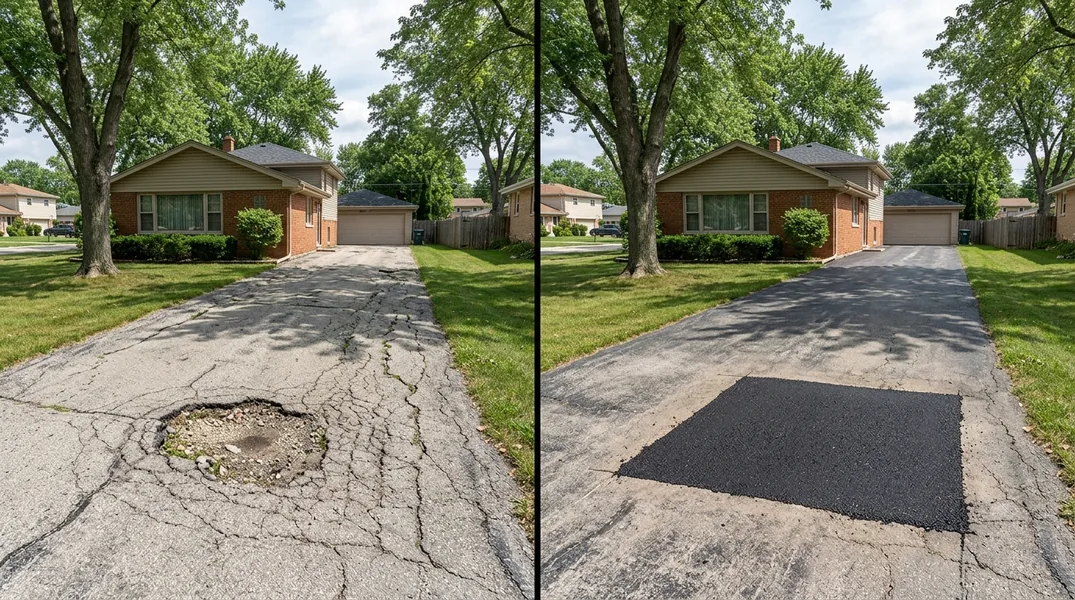
How Chicago Winters Create Potholes and Driveway Damage
Every spring, Chicago homeowners face the same frustrating reality: their driveways are riddled with potholes, cracks, and heaving sections. This seasonal damage isn't random. It's the direct result of how asphalt behaves when exposed to the freeze-thaw cycle that defines our region's winters.
When water seeps into small cracks in your asphalt driveway, it expands as temperatures drop below freezing. This expansion creates pressure from beneath the surface, pushing up and weakening the asphalt layer. Once the temperature rises, that water melts, leaving voids underneath. The pavement then sinks or breaks apart under the weight of vehicles, creating the potholes you see in March and April. This process, called frost heave, is one of the most destructive forces working against asphalt in northern climates.
The damage compounds over multiple freeze-thaw cycles. A small crack that you might have ignored in October becomes a significant structural problem by spring. If your driveway experienced heavy snow loads or salt exposure during the winter months, the damage is likely to be more severe. Understanding this cycle is crucial because it helps you make the right decision about whether your driveway needs a quick patch or a more comprehensive solution.
When Pothole Repair and Asphalt Patching Make Sense
Pothole Repair & Asphalt Patching is the most affordable and quickest solution for isolated damage. If you have one or two potholes in an otherwise solid driveway, patching is often the right choice. A professional patch involves cleaning out the damaged area, applying a tack coat to help adhesion, and filling it with new asphalt that's compacted to match the surrounding surface.
The key question is whether your damage is isolated or widespread. If your driveway has potholes scattered across different areas, multiple cracks, or visible signs of settling, patching alone won't solve the underlying problem. However, if the damage is limited to one or two specific spots and the rest of your driveway is in good condition, a quality patch can extend the life of your pavement by several more years. Professional patching, done correctly, can last 3 to 5 years if the underlying base is still stable.
One important consideration: temporary or DIY patches often fail quickly because they don't address the root cause of the damage. If water continues to seep beneath the patch, it will eventually fail. That's why working with an experienced contractor in Chicago matters. They'll assess whether the base layer beneath the pothole is still sound before recommending a simple patch.
Comprehensive Driveway Repair: When Patching Isn't Enough
Driveway Repair that goes beyond simple patching becomes necessary when you're dealing with multiple problem areas, extensive cracking, or signs of base failure. If your driveway has several potholes, alligator cracking (a pattern of interconnected cracks), or sections that are noticeably sunken or heaving, you're looking at structural issues that require more than a surface-level fix.
Comprehensive repair might involve removing and replacing damaged sections of asphalt, addressing drainage problems that are allowing water to accumulate beneath the surface, or stabilizing areas affected by frost heave. This approach is more expensive than simple patching but significantly less costly than a complete repave. It's often the right choice when damage covers 25 to 50 percent of your driveway's surface area.
The advantage of this middle-ground approach is that it can add 5 to 10 additional years to your driveway's life while being more economical than full replacement. Your contractor will evaluate the condition of your base layer, subgrade, and drainage to determine whether comprehensive repair is viable or whether full replacement is truly necessary.
Full Repaving: Knowing When It's Time to Start Fresh
If your driveway is more than 15 to 20 years old, shows damage across more than half its surface, or has severe structural issues, Asphalt Driveway Paving & Installation is often the most practical long-term investment. A complete repave removes the old asphalt and installs a fresh new surface with a properly prepared base layer. This gives you the longest lifespan and the best protection against future frost heave and pothole formation.
Repaving is also the right choice if you've had the same driveway patched multiple times over several years. Repeated repairs are a sign that the underlying structure is failing. Continuing to patch is like putting a band-aid on a deeper wound. A new driveway, properly installed with adequate drainage and base preparation, will resist Chicago's harsh winters much more effectively than a patchwork of repairs.
One benefit of repaving that homeowners sometimes overlook is that it improves curb appeal and property value. A cracked, potholed driveway detracts from your home's appearance and can affect how potential buyers perceive your property's overall condition. A smooth, dark asphalt driveway creates an immediate positive impression.
Asphalt Resurfacing and Overlay: A Middle Option
For driveways that are structurally sound but cosmetically worn, Asphalt Resurfacing & Overlay offers an economical alternative to full repaving. This process involves cleaning the existing surface and applying a new layer of asphalt on top. It's less invasive and less expensive than complete removal and replacement, making it an attractive option for homeowners working within a budget.
Resurfacing works best when the underlying base is still solid and the damage is primarily cosmetic or involves minor cracks and surface deterioration. If your driveway has significant structural problems, base failure, or severe frost heave, an overlay will only mask the problem temporarily. The underlying issues will eventually cause the new layer to fail as well.
The lifespan of a resurfaced driveway is typically 7 to 10 years, which is less than a full repave but more than patching. If your driveway is 10 to 15 years old and showing surface wear but no major structural damage, resurfacing can be a smart way to extend its life and improve appearance without the cost of complete replacement.
Making Your Decision: Cost, Timeline, and Long-Term Value
Choosing between patching, repair, resurfacing, and repaving ultimately comes down to three factors: the extent of damage, your budget, and how long you plan to stay in your home. If you're selling soon, a cosmetic fix might be sufficient. If you're planning to stay for another decade or more, investing in a full repave now could save you money and hassle down the road.
The pricing for pothole repair typically ranges from a few hundred dollars for a single patch to several thousand for comprehensive repairs. A full repave costs more upfront but provides the longest-lasting solution. Getting a professional assessment is the best way to understand your options and make an informed decision.
Don't let spring potholes catch you off guard. Contact Chicago Asphalt Paving today at (312) 878-9687 to schedule a free estimate. Our experienced team will evaluate your driveway's condition and recommend the solution that makes the most sense for your situation. Whether you need a quick patch or a complete repave, we'll help you restore your driveway and protect it against future Chicago winters.
Looking for a professional asphalt paving contractor in Chicago? Chicago Asphalt Paving responds fast for all your asphalt paving needs.
Get a Free Quote